Thrive With Talia
- Jecara Hood
- Apr 28
- 4 min read

Updated: 4 days ago
Designing a Welcome Flow That Turns New Subscribers Into Coaching Calls
One of the biggest missed opportunities I have been noticing with personal brands and coaches is the welcome experience.
Someone joins an email list because they’re curious, motivated, or actively looking for change and then… nothing really guides them forward.
That’s exactly the problem I explored in this mock project for Thrive With Talia, a mindset and productivity coach focused on helping people create clarity, balance, and sustainable growth.
The goal wasn’t just to send emails.
It was to design a system that gently moves subscribers toward booking a coaching call — without feeling pushy or overwhelming.
The Problem
Thrive With Talia was already attracting subscribers, but there wasn’t a clear path from joining the list to becoming a client.
New subscribers needed:
A clear next step
Time to build trust
Value before commitment
A calm, supportive experience aligned with coaching
Without a structured welcome flow, high-intent leads could easily lose momentum. A welcome flow works best when it guides subscribers intentionally — balancing clarity, trust-building, and conversion opportunities over time.
And in email marketing, momentum matters.
The Goal
I wanted this welcome flow to do two things at the same time:
Capture people who were ready to book immediately
Nurture subscribers who needed more time
Because not every subscriber buys the same way — especially in coaching.
Some people are ready right now. Others need reassurance, education, and emotional trust first.
The flow needed to support both.
My Strategy
Instead of choosing between selling or nurturing, I built an early-CTA + nurture hybrid welcome flow.
Here’s the thinking behind it:
Give ready subscribers an immediate path
If someone joins a coaching list, there’s a good chance they already want help.
So the first email doesn’t wait.
It welcomes them warmly and immediately offers the option to book a free coaching call — framed as an invitation, not a sales push.
Support slower decision-makers
Many subscribers aren’t ready to commit yet.
The second email focuses on value:
mindset shifts
helpful insights
a free resource
This builds trust while showing what working with Talia actually feels like.
Repeat the invitation naturally
People rarely convert from a single touch point.
Rather than pushing harder, the flow simply reintroduces the coaching offer after trust has been established.
The goal is encouragement — not pressure.
Design for emotional ease
Coaching audiences don’t respond well to busy, aggressive marketing design.
So I intentionally kept the layout:
minimal
calm
spacious
easy to read on mobile
The emails are meant to feel supportive, not sales-heavy.
The Welcome Flow
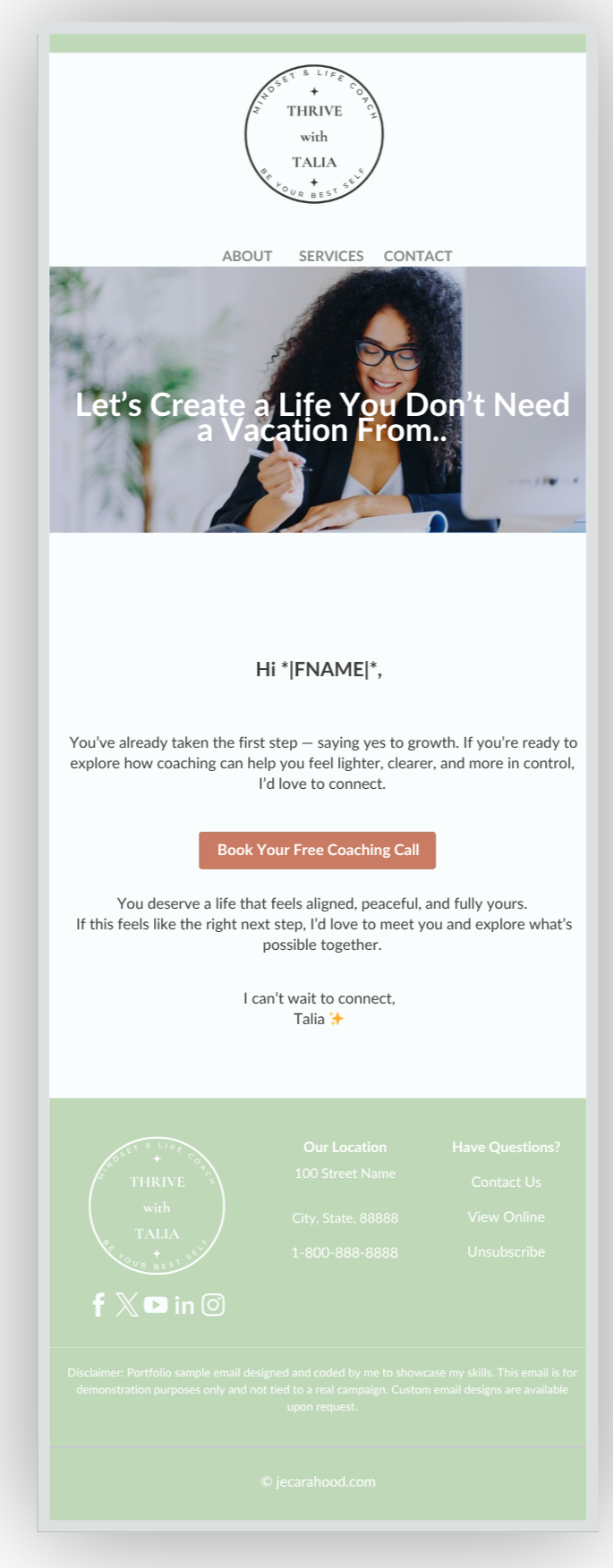
Email 1 — Welcome + Coaching Call Invitation
This email captures early intent.
It introduces the brand, sets a reassuring tone, and gives subscribers a clear next step if they’re ready.
Focus
Personal welcome
Brand introduction
Immediate coaching call invitation
Low-pressure messaging
👉 Primary action: Book a Free Coaching Call

Email 2 — Nurture + Value
Not everyone converts immediately, so this email slows things down.
Instead of selling, it provides helpful guidance and delivers a free resource that reflects Talia’s coaching style.
Focus
Practical mindset support
Relationship building
Authority through value
Continued engagement
👉 Primary action: Engage with the resource

Email 3 — Supportive Final CTA
By this point, subscribers understand the brand and feel more comfortable.
The final email brings the coaching offer back into focus — emphasizing outcomes, clarity, and confidence.
Focus
Benefits of coaching
Removing hesitation
Encouraging action gently
👉 Primary action: Book Your Coaching Call
My Design Approach
For this project, design wasn’t just aesthetic — it supported conversion psychology.
I focused on:
Soft wellness-inspired visuals
Strong headline hierarchy
Clear CTAs with breathing room
Mobile-first readability
Consistent branding across the sequence
The intention was simple: reduce overwhelm so subscribers can focus on the message and next step.
Why This Approach Works
Rather than treating every subscriber the same, the flow was designed to support different decision-making timelines while still creating a cohesive on-boarding experience. This flow works because it meets subscribers where they are.
Ready buyers can act immediately
Hesitant subscribers receive value first
Multiple invitations increase conversion opportunities
Minimal design keeps attention on the transformation
Instead of forcing conversion, the emails guide it naturally.
Potential Performance Indicators
Based on common lifecycle email benchmarks for coaching and creator brands, this type of flow typically supports:
Open Rates: 45–65%
Click Rates: 4–10%
Coaching Call Bookings: 3–6%
The early CTA strategy helps prevent losing subscribers who were already ready to take action.
Opportunities for Optimization
If this were a live client account, my next testing priorities would include:
Testing CTA placement in the first email
Comparing shorter vs. longer nurture content
Adding testimonial snippets for social proof
Testing light urgency messaging around availability
Email marketing works best as an evolving system — not a one-time setup.
Final Thoughts
A welcome flow sets the tone for the entire customer relationship.
For Thrive With Talia, the goal was to create an experience that feels human, calm, and supportive while still driving real business outcomes.
Because the best email marketing doesn’t feel like marketing.
It feels like guidance arriving at exactly the right moment.
Want the Framework Behind the Flow?
Download The Beginner’s Welcome Flow Starter Kit — a simple guide to planning onboarding emails that build trust, guide subscribers, and support conversions more intentionally.
Inside:
the 5 essential welcome emails
common onboarding mistakes
simple flow planning prompts
beginner-friendly QA reminders
[Download the Starter Kit]

Comments