What Makes an Email Actually Work?
- Jecara Hood
- Apr 27
- 3 min read

Updated: 4 days ago
A Framework From an Emerging Email Marketing Designer & Developer
Many people assume successful emails are primarily about visuals — strong layouts, attractive colors, and polished branding. But as I studied lifecycle marketing, CRM automation, and real-world email programs, I realized something important:
Great emails don’t start with design. They start with intention.
Email sits at a unique intersection of marketing strategy, user experience, copywriting, and technical execution. When one of those pieces is missing, even a beautiful email can fail to perform.
Through studying lifecycle marketing, CRM automation, and real-world email programs, a clear framework begins to emerge for evaluating whether an email truly works.
The Problem With Many Marketing Emails
Many brands invest significant time designing emails but treat them as isolated campaigns rather than part of a broader customer journey.
Common challenges across many email programs include:
Emails designed before defining a clear objective
Messaging that doesn’t match where the subscriber is in the lifecycle
Over-designed layouts that reduce clarity and accessibility
Lack of collaboration between strategy, copy, and development
Technical issues that impact responsiveness or deliverability
Email marketing is often underestimated. In reality, it’s one of the most direct and measurable communication channels a brand owns.
For an email to succeed, design must support behavior — not just aesthetics.
My Email Effectiveness Framework
Effective email programs consistently reflect five core elements.
1. Objective-First Thinking
Every effective email answers one question:
What action should the reader take?
Whether the goal is onboarding a new subscriber, confirming a purchase, or encouraging re-engagement, clarity of purpose drives every design and copy decision.
Without a defined objective, an email risks becoming visual noise in a crowded inbox.
2. Lifecycle Awareness
Not every subscriber needs the same message.
Email becomes powerful when it recognizes where someone is in their relationship with a brand:
New subscribers learning about the product
Active customers building habits
Returning users needing reminders
Lapsed subscribers requiring re-engagement
Understanding lifecycle context helps shape tone, content hierarchy, and calls to action.
Often supported through segmentation and audience targeting.



3. Behavioral Design
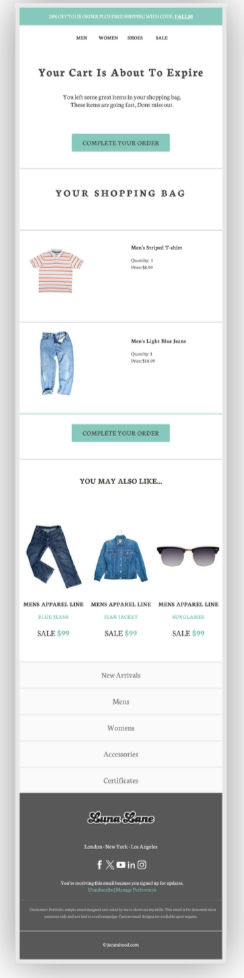
Email design isn’t decoration — it’s guidance.
Subscribers scan rather than read, especially on mobile devices. Effective design supports natural reading behavior through:
clear visual hierarchy
scannable sections
mobile-first layouts
accessible typography and contrast
focused attention on one primary action
Good design reduces friction and helps readers quickly understand value.
4. Conversion Alignment
Design and copy should function as a single system.
Strong marketing emails typically include:
one clear primary CTA
benefit-driven messaging
concise supporting content
consistent visual reinforcement of the goal
When copy and design compete for attention, performance suffers. When they align, conversion becomes intuitive.



5. Technical Reliability
Behind every successful email is thoughtful development and testing.
As I’ve learned more about email coding and deployment, I’ve come to appreciate how technical execution directly impacts user experience. Key considerations include:
responsive HTML structure
cross-client compatibility
dark mode behavior
accessibility considerations
QA testing using tools like Litmus and Email on Acid
A well-designed email only succeeds if it renders correctly across devices and inbox environments.
Applying This Framework to My Portfolio Projects
Applying this framework in practice highlights how individual emails contribute to larger customer journeys.
Instead of starting with visuals, I begin by defining the subscriber’s context and intended action. From there, I design layouts that support scanning behavior and develop responsive code structures that prioritize consistency across email clients.
Working through mock lifecycle campaigns — including welcome sequences, promotional campaigns, and transactional emails — has helped me understand how individual messages contribute to a larger customer journey.
This process has shifted my mindset from creating individual emails to thinking about email ecosystems.
Ongoing Areas of Focus
Email marketing is an interdisciplinary field that continues to evolve, requiring ongoing refinement across strategy, design, and technical execution.
There is always more to learn and refine.
Right now, I’m focused on improving:
building scalable modular email systems
refining responsive and mobile-first design patterns
strengthening accessibility best practices
expanding CRM and lifecycle automation knowledge
improving testing workflows and QA documentation
learning how design decisions influence long-term program performance
My goal is not just to design emails, but to contribute meaningfully to email programs that balance creativity, usability, and measurable results.
Looking Ahead
Email marketing continues to evolve alongside changing user expectations and technology. The most effective email professionals understand both the creative and technical sides of the channel.
As I grow in this field, I’m excited to collaborate with teams that value thoughtful lifecycle marketing, strong user experience, and performance-driven design.
As expectations around email continue to evolve, successful programs will increasingly rely on professionals who understand both creative thinking and technical execution — not as separate disciplines, but as one connected system.
About the Author

Comments